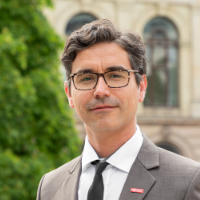
 Prof. Alejandro Tirachini
 Institute of Public Transport Planning, Technical University of Braunschweig (DE)
Head of the Institute of Public Transport Planning at TU Braunschweig and a part-time Professor at Universidad de Chile. Co-editor of the Handbook on Transport Pricing and Financing (Edward Elgar Publishing, 2023).
[2K] Keynote session - day 2 (Thursday)
Ticket to ride: how much should you pay for public transport?
In this talk, we revisit the theory of public transport pricing, from first-best and second-best principles, to the inclusion of a wide range of traffic externalities, travel time variability, passenger crowding, health benefits from active mobility, the operation of automated vehicles, and multimodal substitution that includes cars, walking and cycling. New research findings are critically assessed, together with current policy trends on nation-wide public transport subscription tickets and fare-free public transport in an increasing number of cities.
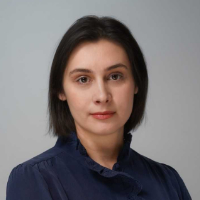 Prof. Anna Nicińska
Faculty of Economic Sciences & Digital Economy Lab, University of Warsaw (PL)
Associate Professor at the Faculty of Economic Sciences & Digital Economy Lab (DELab) at University of Warsaw. Member of the Editorial Board of Research on Aging & Steering Committee of the European Health Policy Group (EHPG)
[3K] Keynote session - day 3 (Friday)
Travel behaviour: from individual attitudes and norms to traffic flows
This talk addresses the problem of modelling individual decisions by rational road users and methods of aggregating them. The starting point is Ajzen’s theoretical foundations on reasoned action and planned behaviour, stating that motivations rooted in attitudes and norms induce the intention to make a specific choice – which, under the budget constraints and choice-set availability, leads to the individual behaviour of particular road users. Theoretical models can be verified empirically and described through statistical or causal relationships. Internal and external validity of these models is crucial for adequately forecasting such behavioural patterns and aggregating them into traffic flows in transportation models.
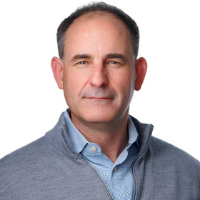 Prof. Michael Hewitt
 Quinlan School of Business, Loyola University Chicago (USA)
Professor of supply chain management in the Quinlan School of Business at Loyola University Chicago and executive director of the Quinlan Business Leadership Hub. Editor-in-chief of the Transportation Science journal.
[1K] Keynote session - day 1 (Wednesday)
Stochastic and Dynamic Optimisation Approaches to Planning Demand Adaptive Transit Systems
This talk focuses on stochastic and dynamic optimisation-based approaches for planning Demand-Adaptive Transit systems. For tactical planning, we consider the problems of determining the set of fixed stops on a bus line that minimises a weighted combination of vehicle transportation and passenger out-of-route costs. We model this problem as a variant of the Stochastic Traveling Salesman Problem and present exact and heuristic algorithms for solving instances of this model. For operational planning, we formulate the online optimisation problem of determining the customer requests involving non-fixed stops a bus should serve as they arrive over time, with the aim of maximising ridership while ensuring the bus schedule is observed. We model this problem as a Markov Decision Process and present multiple parallelizable look-ahead-type, rolling-horizon approaches to provide near real-time responses to individual requests. The effectiveness of these approaches is demonstrated on adaptations of TSP benchmark instances and data derived from real-world operations.